Pluto’s mysterious moon
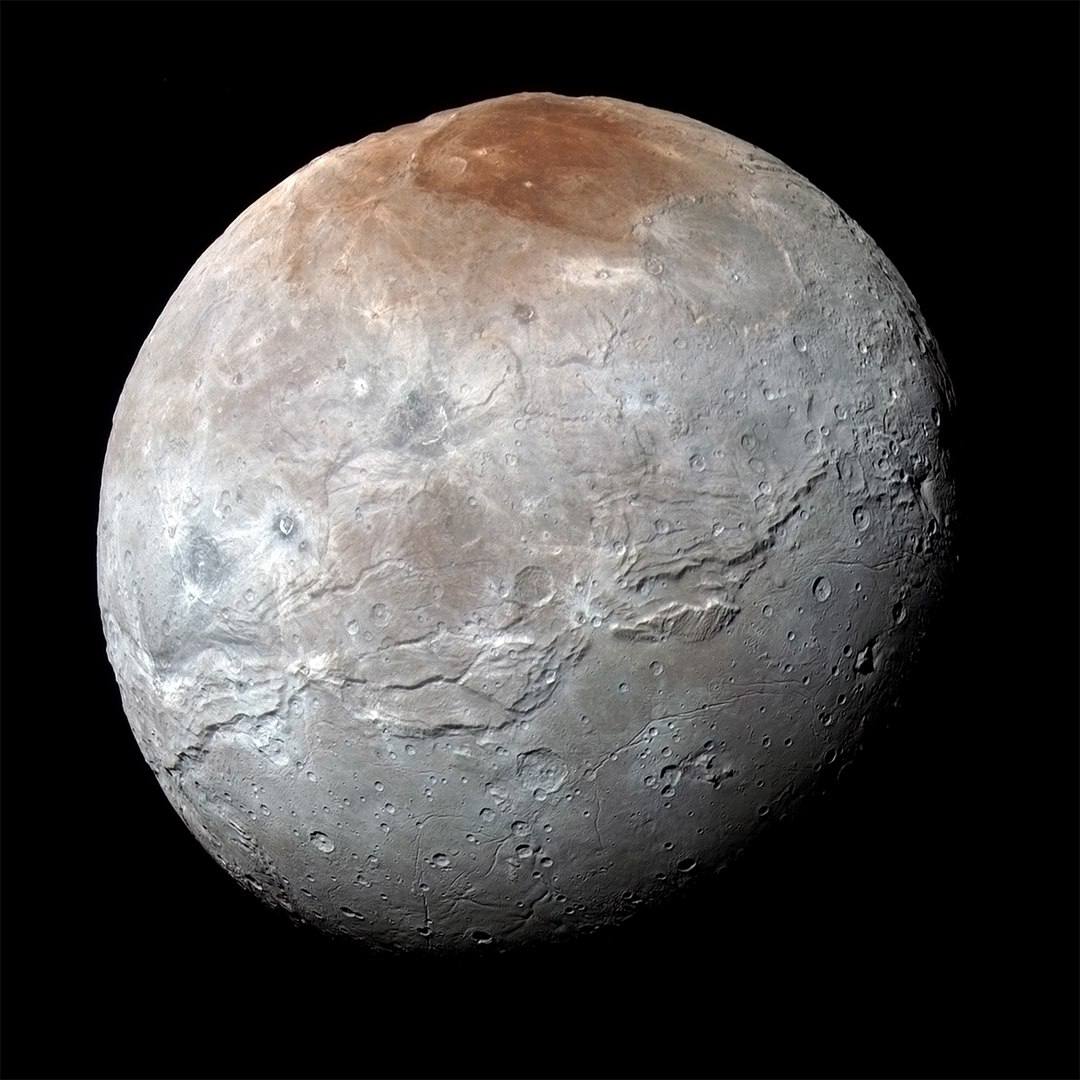
In 2015, NASA’s New Horizons spacecraft revealed fascinating images of Pluto’s moon, Charon. Among the most intriguing discoveries was a peculiar reddish patch near its north pole, which scientists have named Mordor Macula. This enigmatic area has captivated astronomers and sparked curiosity about its origins.
The journey of methane
The reddish hue of Mordor Macula is not a mere coincidence but a result of complex interactions between Pluto and its moon. Methane, a simple organic molecule, escapes from Pluto’s atmosphere and drifts into space. Charon’s gravity captures this methane, causing it to freeze onto the moon’s icy surface. This process sets the stage for a remarkable transformation.
The role of sunlight
As the seasons change and spring arrives, sunlight bathes Charon’s surface. The frozen methane begins to sublimate, transforming from a solid back into a gas. This sublimation process leaves behind heavier organic compounds, which gradually stain the moon’s surface a rusty red. Over time, these compounds accumulate, giving Mordor Macula its distinct coloration.
A window into the cosmos
The discovery of Mordor Macula provides scientists with a unique opportunity to study the intricate relationship between celestial bodies. By understanding how methane and other compounds interact with Charon’s surface, researchers can gain insights into similar processes that may occur on other moons and planets.
The allure of dark space
Amid the vastness of space, Pluto and its moon Charon offer a glimpse into the dynamic and ever-changing nature of our solar system. The mysterious red spot of Mordor Macula serves as a reminder of the complex and beautiful interactions that shape the celestial bodies around us, capturing the imagination of scientists and space enthusiasts alike.